Saturday, September 27, 2014

Broc Parkes living the dream in MotoGP


TWELVE months ago Broc Parkes was looking at having to find a real job, after being forced back to Australia without a ride, yet now he finds himself in the premier class of motorcycle racing, MotoGP, living out his childhood dream.


It’s been a wild ride from the motocross tracks of the Hunter to the glitz and glamour of MotoGP, and it certainly hasn’t been easy for the Cessnock product.

He’s spent 13 years in Europe, bouncing from contract to contract, bike to bike, hoping to keep the dream alive.

Parkes was forced back to Australia in 2013 after failing to find a ride that would finance staying in Europe. He came back to the Hunter for Christmas with no offers, and faced the real prospect of giving the sport away.

His career was on the ropes after he had been so long a contender in the World Superbike and World Supersport championships.

Eventually, Yamaha offered him a spot in the factory team for the Australian FX Superbike Championships.

By season’s end Parkes would hold that trophy aloft .


That success brought further opportunities in the World Endurance championship and a wildcard into a World Superbikes race, which helped put Parkes back on the map and firmly in the shop window.


Then he received the call he never expected.

It came from friend and current team owner Paul Bird, offering Parkes a ride in MotoGP for season 2014, helping fulfil a childhood dream in the most unlikely circumstances and capping off a crazy year for the 32-year-old.

“Last year I was in the mind of maybe never having another ride again. A lot of things went through my mind during that time, because I was home for so long with nothing, and there wasn’t really anything on offer. There were times when I was thinking that maybe I’d have to go back to a normal job in Australia.

“When I got the call-up from Paul Bird it was a really big surprise. He’s a friend of mine, I’ve ridden for him before and he believes in me as a rider, and luckily enough he took me on.’’

But things haven’t necessarily become any easier for Parkes, despite making the jump to the premier class.


Parkes’s team, Paul Bird Motorsport, is the smallest in the field and the only one without factory support. When he signed with the team, they were meant to be riding factory supported Aprilia bikes, only for those plans to quickly fade. Instead, the team’s bikes are built in-house at Paul Bird with Aprilia engines.

It’s part of the reason that the team won’t be returning to the MotoGP field next season. Simply fielding an entry in the class costs upwards of €8-10million, money that is not easy to find.

Parkes’s first season in the top class has been a steep learning curve. He’s had to learn new tracks, a new bike and learn how to ride on the new Bridgestone tyres, something that takes most riders in the field 12 months to master.

The limited financing and lack of factory support also ensures challenges in developing the bike. Parkes’s team have struggled early on race weekends, with the rider regularly qualifying at the back of the field, but showing improvement in races.

“Because we only had the bike for a year, it wasn’t developed at all. This year every track we go to, we are always around two seconds faster than last year on that bike.

“All the other teams roll up to the track with a base setup and they don’t really go that much faster from the first session to the race, whilst we’re making up something like 1-1.5 seconds every time we go out on track. We’re a lot smaller than every other team, so it takes a little bit longer to catch up.”

But in true fashion, Parkes continues to punch above his weight. At the time of writing he sits in 20th place in the Championship on seven points and has the distinction of scoring a World Championship point in his first MotoGP race.

The team scored just three points for all of the 2013 season between two riders.

Many see the glitz and glamour that exists on the MotoGP circuit and assume Parkes would be riding all the way to the bank, but that is not the case. While Valentino Rossi earns a salary of $17million a season, the money drops away significantly at the back of the field, but the financial side of things doesn’t faze Parkes. “I’m happy to just be in MotoGP and maybe have the opportunity to have something for next year. It’s been a lifelong dream for me and, money-wise, for sure it’s not big money. I just want to be here and I’m lucky enough to have some personal sponsors in Newcastle, such as SRO Group, that have got behind me. They understand racing and it’s really nice to have their support.”


The financial game plays an important part in helping riders secure positions in teams, and it makes life difficult for those like Parkes, who don’t have a lot of money behind them.

“That’s how it is, for Australians it’s quite difficult to have a lot of money behind us, because Australia is not really as big into motorcycle racing as compared to Spain or Italy.

‘‘Dorna, who own MotoGP, are Spanish, so they push their riders hard and a lot of guys come in with a lot of money behind them, and it doesn’t matter who you are, they’re going to take the money over talent, as they then have the money to run the season.”

With the dream of MotoGP ticked off the bucket list this season, Parkes will complete another when he represents his country at Phillip Island when the circus comes to town for the Australian MotoGP from October 17-19.

“I can’t wait for that; I’m looking forward to it. I know it’s going to be difficult because I’m used to going to the Island and going for the win. I don’t want to disappoint, I want to go there and do the best I can. It’s nice to have all of Australia behind me, and if we score points it’s a big thing.

“Hopefully we can be on the pace. I know the track really well and had good results there in the past. It’s just a question of whether the bike is going to work there for us, and hopefully make everyone happy and they can get behind me for next year.” Again without a ride for 2015, Parkes’s future is uncertain. But unlike previously, there are opportunities. He’s in discussions with Yamaha about a testing role for next season and offers are continuing.

“At the moment I thought I’d have maybe one more year in MotoGP. If I can’t be in MotoGP, I’d like to be in World Superbikes. If I can’t be in World Superbikes, I’d like to go to the British Superbikes, which is a good championship and the biggest domestic championship in the world. Paul Bird’s offered me a ride there next year, which is really nice; it gives me a fall-back plan.”

But regardless of what happens in the future, Parkes is just happy living out his childhood dream that was forged in the Hunter and fuelled by 13 years of hard work and determination.

“It’s a dream of mine to be in MotoGP and to be here this year and do what we’ve done I’m pretty happy with it.

‘‘My other dream is to be a world champion. That could happen, but time is ticking, I’ll keep trying my best and see what happens. I’ve been pretty happy with what I’ve got out of my career”.

*Article originally appeared in the Newcastle Herald 

Monday, September 22, 2014

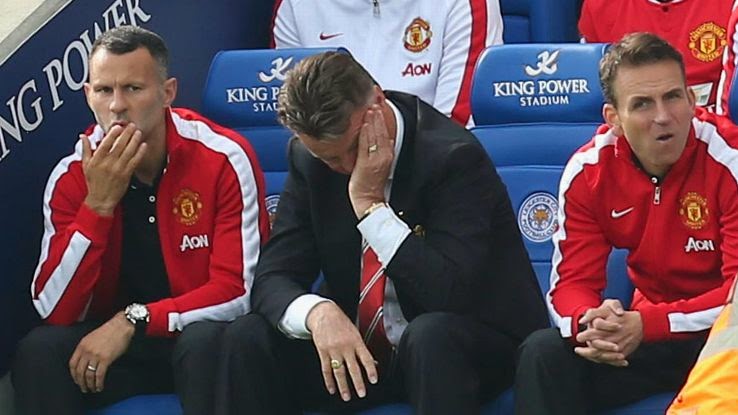
What's really wrong with Manchester United


Everyone who’s everyone is having their say on the issues that Manchester United are currently facing, so here’s my view.

Most pundits are pointing to the back three/four as the problem area, but I would argue the defensive frailties are simply a by product of what’s happening further up the pitch, in midfield.

A glaring issue overnight against Leicester was United continually getting overrun in midfield, due to the side lacking a strong presence in the centre of the park.

Van Gaal’s line-up overnight featured Falcao and Van Persie playing as a front pair, with Rooney in behind as a No.10. His midfield was then Di Maria on the left, Herrera right and Blind central, in a holding role.

This is the problem.

We saw just how lethal United can be when they attack, but Van Gaal will soon learn that won’t win him the Premier League.

Jose Mourinho knows best, the Premier League is about picking up points; it’s a marathon where every game counts.

The United side is too heavily weighted towards attack.

Against Leicester they couldn’t hold the middle and consequently they were overrun and their defence was stretched, from there, any decent side will simply isolate the defenders and pick you off, which the Foxes did, multiple times.

It works both ways too. Not only is having someone solid in a central role important in defense, but also going forward.

Cambiasso showed that against United. He was the focal point in midfield where everything went through. As soon as the ball turned over, the ball was into the Argentinian and away Leicester went. 

Daley Blind can play the holding role, but he is certainly not as much of a presence as someone like Nemanja Matic or Yaya Toure.

Blind is versatile and it’s one position he can cover, but during the World Cup he wasn’t even playing there for Holland. You also have to remember he’s new to the Premier League and it’s a significant step up from the Dutch Eredivisie, in terms of quality, pace and intensity.

I am a huge fan of Matic and the role he plays. 

He’s a big strong body and he has great distribution, which helps with the fundamental rule of football, win the ball first, then you can use it.

The midfield battle is often overlooked in football and its growing increasingly important, given managers tendency now to play with a single striker and pack the central areas.

United simply haven’t got the balance right.

Rooney does offer something as a No.10, but he’s a striker and we all know how much they like tracking back. He will work for you, but his setting is firmly switched to ‘goals’, as is the same for Falcao and Van Persie.

Di Maria can play in the front line, and he wasn’t exactly known for his love of defensive work at Real Madrid, and Herrera is also an attacking minded midfielder.

Blind can’t do the job alone.

Question is, who do they turn to?

Carrick and Fletcher are options, perhaps even Phil Jones, but they still don’t offer you a strong physical presence that’s going to hold the centre of the park, win you the ball and distribute.

Fellaini could be an option in that role given his size, but Van Gaal has already given an indication that he’s not entirely a fan of the Belgian and we already know what United fans think.

If United can somehow find a solution and plug the gap until January, then they have the attacking firepower to win plenty of games. 

Come the window, they may take another look at Arturo Vidal, who is exactly the type of player they need. If I was shopping for someone, I’d go for Daniele De Rossi personally, but I don’t know how keen Roma would be to sell, nor De Rossi to leave. Realistically Vidal is probably the best bet. 

Van Gaal has forced himself into playing Rooney as his No.10, given the plethora of options he has with Van Persie, Falcao and the England captain in the mix, but playing with a No.10 is a luxury.

Often the No.10 has cover placed in behind, sometimes with two screeners which provide protection, or the attacking midfielder sitting at the top of a diamond.

Sides that use it best are those that command the midfield, dictating the game and enjoying the bulk of possession. At the moment that’s not United.

The first lesson Van Gaal and United must learn is this.  

At the end of the day, it’s not how many goals you score, its how many points are next to your name come the end of May.  


Mourinho is often criticised for his ‘negative’ mindset, which is tailored with the above philosophy in mind, but you only have to look at The Special One’s trophy cabinet to see that it works. 

Saturday, August 30, 2014

Finding my voice - The long road to superstardom


How was your Friday?  I assume your day was a little different to mine.

My working day started at 7am at the Newcastle Herald offices. I’ve come in to work a couple of hours early to ensure the boss has no issues with me skipping out a little prematurely in the afternoon.

I’m off to Sydney to call the Australian Lightweight Title fight between Robert Toomey and George ‘ Ferocious’ Kambosos at Club Punchbowl later that evening.

I’m meant to arrive at 6pm, which means I have to be out on the road by at least 3:30pm.

The early mark means I don’t take a lunchbreak, but it helps me get on the road on time and off on my journey.

I begin my journey to Club Punchbowl, a route I’ve taken previously, which is a 2.5 hour drive, on a good day.

Today is not a good day.

It’s wet, conditions are tricky and I need everything to fall nicely into place.

Radio reports tell me that there’s a breakdown ahead, great! There’s a slight delay, but I get off the highway relatively on track and I’m now facing the dreaded Pennant Hills Rd.

It’s a slog and I’ve hit it smack bang on 5pm, but fortunately it’s not too bad and I’m still on target.

Another delay at Lidcombe almost brings me unstuck, but I pull into Rickard Rd McDonald’s at Bankstown with minutes to spare.

I swallow the only thing I’ll have eaten since a 6.30am Banana in the five minute drive to Club Punchbowl and walk through the doors of the event at 6.05pm.

Job done. Everything has gone to plan.

Or has it.

The man behind the live stream I’m working on can’t get the audio equipment to work.

“Do you know how to work this stuff? I’m not used to this equipment,” he tells me.

 I’ve setup similar operations during my time calling sport on community radio, so I try my best to help. I turn on the power switch ( YES!) and fiddle around with the different buttons and switches, testing, hypothesising, testing again.

After half an hour of fiddling, I’m handed an instruction book.

“See if this helps” the man says.

It didn’t.

Long story short, the commentary didn’t happen.

The man in charge ended the search for microphone volume with this line.

“I’m more interested in getting these cameras right, I don’t really care about the commentary.”

Awesome.

So I bite my tongue, pickup my notebook, containing the research I’d spent three nights working on, find a seat at ringside and enjoy the event.

The promoter comes over, apologises and hands me $100 for my trouble. It’s quite a bit less than what I was meant to make, but I appreciate the gesture.

He’s a friend and he couldn’t be more apologetic. It’s not his fault.  

The funny thing is, it’s not the worst story I have to tell.

That would be the time I called a National Youth League match in Gosford, between the Central Coast Mariners and the Perth Glory.

I arrived in the commentary box to find that the council had ripped out all the phone lines during the week, meaning we couldn’t connect our audio gear as required to get the broadcast back to 6RPH in Perth.

So, I called the game with my IPhone on speaker, with a co-commentator sitting alongside. 

There are plenty of other stories too, but it’s all apart of the crazy ride I started on when I began life in the media as an 18-year-old.

So far it’s taken me to Koori Radio, 2SSRFM, Network Ten, Greater Western Sydney GIANTS, Gold Coast Titans, Newcastle Herald and hundreds of commentary gigs across the country.

It’s cost me friends, I’ve missed people’s weddings, and it’s cost me relationships.

Apparently calling a football match for free on a Saturday night instead of spending time with your girlfriend is not on. 

I’ve stalked, harassed and networked with all the right people and I don’t know how many times I’ve heard the line – “Keep getting experience”

If only they knew.  

There’s times when I think of packing it in, but then I realise that everything I’ve put in over the last nine years would be for nothing.

I’m starting to book commentary gigs with more regularity and all the right people know I exist, well at least I hope they do.

I’ve peppered their emails and post boxes that often over the last few years; they should know I’m around.

 I occasionally get allowed into commentary boxes at different events and get the chance to see the ‘pro’s’ do their work.

I sit quietly at the back, scribble some notes and generally stay out of the way.

It sure looks easy.

Maybe it’s because of the multiple screens they have to watch the game on, or the stats man sitting beside them, or the producer in their ear, telling them about the substitution that’s about to happen.

Or it could be because they’re just very good!

There are definitely no technical problems, no incorrect team sheets, no tinted glass, no IPhones, no poor lighting, no open air boxes. There’s catering, correct payment, no lost invoices and they don’t have to transport or setup the gear.  

I pull into the service station on my way back to Newcastle and refill the tank that had been drained by the journey down.

I look at the fuel pump, it reads $87.03.

I pull out the $100 I’ve been handed hours earlier and pay the cashier.

He hands me back $12.80 in change.

“All that for that” I say to myself.

I jump back in the car and restart the journey home, with work starting again in a couple of hour’s time.

I slump back into my desk and clock on for another day and begin typing what you’ve just been reading.

“How was the boxing last night?” a colleague asks.

“Priceless” I reply.

Priceless, indeed.

Friday, July 25, 2014

Daniel Geale gambles big with Golovkin fight


*Article originally appeared in the Newcastle Herald on July 25, 2014


Sunday’s World title fight between Daniel Geale and Gennady Golovkin should really be scheduled for Las Vegas rather than New York, given the gamble the Australian is taking.

The Golovkin fight is high in risk for Geale, yet high in reward.

A fight with Golovkin was always the final part of Geale’s master plan; however events have conspired to grant him the opportunity sooner than expected.

The plan hit a massive speed bump in August last year, when Darren Barker climbed off the canvas to outwork Geale and steal his world title via a split decision. It wasn’t meant to be that way, in what was Geale’s American debut. The fight was Geale’s showcase to the American public and the Barker fight was meant to be a test, but end in a Geale victory all the same.

But Geale has made a habit of doing things the hard way in his career.

He won two world title fights against Sebastian Sylvester and Felix Sturm in their own backyards in Germany, a place many fighters refuse to go, and he’ll have to shock the world again to claim the IBO and WBA Middleweight titles on Sunday.

Geale could have faced Sam Soliman for his newly won world title or scheduled a rubber match with Anthony Mundine , making good money facing either and having a far easier night.

But instead Geale faces the most devastating boxer in the world in Golovkin.

Golovkin is that devastating he has a knockout percentage of 89.66% and is undefeated in 29 professional fights. His last sixteen fights have ended by knockout and the last time one of his fights went the distance was in 2008.

Geale’s biggest asset - his work rate and his non-stop pressure and volume punching - won him his two world title fights over Sturm and Sylvester in Germany. Golovkin has never gone the full twelve rounds in any of his 29 professional fights. Geale has fought just three fights more than Golovkin in their respective careers, yet Golovkin has boxed 113 rounds less than Geale.

 If Geale can take the fight to the final minutes, his work rate and will to win may just prove the difference.As scary as those statistics are, it in fact, could be the Achilles heel for Geale to exploit, if indeed one exists.

Golovkin has devastating power and as much as Geale needs to be cautious coming forward, he still needs to fight in his natural style and trust his instincts. Geale’s extensive amateur experience ensures he is good technically and he has a solid defence, backed up by the fact he has never been knocked out in his 32 fight career.

Geale must drag Golovkin into the deep water and try and drown him. Geale does not have the knockout power to stop Golovkin, but he can outbox him and out work him, and the only way he’s winning on Sunday is if he goes the distance.

Many boxing writers in the US aren’t giving Geale much hope, but as good as Golovkin is, he fails to have a significant scalp on his resume and I would argue that Geale is the best credentialed fighter he has fought.
Geale has wins over world champions Roman Karmazin, Anthony Mundine, Felix Sturm and Sebastian Sylvester, which ensures he won’t be overawed.

Golovkin boats wins over Matthew Macklin and Osumanu Adama, who have both had history with Geale. Adama fell to the Tasmanian back in 2012 in a twelve round decision, while Geale was scheduled to fight Macklin earlier this year before injury in the main event on the card saw broadcaster HBO cancel.

That fight was meant to be a reported ‘box-off’ with the winner moving onto Golovkin, but the cancellation has in fact worked in favour of the Australian. Geale is seen as the bigger box office draw and therefore he landed the opportunity.

Geale will be well remunerated for his efforts in the ring, with the fight going worldwide on pay-per-view; he’ll also have the chance to restart his master plan with multiple world titles at stake.

But lose on Sunday and who knows where Geale’s career will go.

A crushing defeat will see Geale once again rejoin the pack and after a long climb to the top, at 33, does he have it in him to do it all again?

It’s refreshing after all these years of seeing Anthony Mundine and Danny Green cherry pick opponents to have a fighter simply line up the best and attempt to knock them down.
Up until now, he’s beaten them all.
Do it on Sunday and he may just become our best ever.*Geale-Golovkin is on Main Event Pay-Per-View from 11am Sunday


TALE OF THE TAPE


Daniel Geale – 32W-2L Gennady Golovkin – 29W-0L


Alias – The Real Deal Alias – GGG


Height – 5’10 Height – 5’10 ½


Reach – 180cm Reach – 179cm


Knockout Percentage – 50% Knockout Percentage – 89.66%


Rounds Boxed – 237 Rounds Boxed - 124

Tuesday, June 10, 2014

World Cup 2014 preview: your full guide

Adam Santarossa takes you through each side, the players to watch 
and what to expect from the 2014 World Cup in Brazil. 

*This article originally appeared in the Newcastle Herald on June 10, 2014

GROUP A


BRAZIL


The hosts are expected to progress top of the group. The five-time champions will go in as one of the favourites, but the big question will be how they handle the massive expectation and pressure. They have a tough draw in the second round as they’re expected to face the runner up of Group B, which includes Spain and the Netherlands. From there, Italy and Germany could be next. A horror run to the final.


Key Player: Neymar. There’s no question that Neymar has the most pressure on him going into the tournament. The striker was underwhelming for Barcelona this season, and despite having a stellar Confederations Cup on home soil, the World Cup is a different story.


CROATIA


Croatia would be my favourite to progress as runners-up in this group, but they face a tough test first up against Brazil. They have plenty of goals in them with the likes of Mario Mandzukic, Eduardo, Nikica Jelavic and Ivica Olic, not to mention the playmaking ability of Luka Modric. The squad is experienced and have been together for a number of campaigns now. A big chance to progress and trouble in the second round.


Key Player: Mario Mandzukic. The striker had a stunning season with Bayern Munich and he is vital if Croatia is to have a strong tournament.


MEXICO


Had to go to a playoff just to make the tournament, where they made easy work of New Zealand. Traditionally a heavyweight of CONCACAF, they’ve struggled this time around. Inspirational veteran Rafa Marquez will be a rock in defence and Manchester United’s Javier Hernandez will lead the line. Don’t think it will be enough for them to progress.


Key Player: Javier Hernandez. Chicharito hasn’t had the greatest season for Manchester United, but he remains Mexico’s biggest threat. They’ll need his goals if they’re to progress out of the group.


CAMEROON


The Indomitable Lions will face a tough task getting through the group. Cameroon have failed to progress past the group stage in their last four attempts. They’ll rely heavily on Samuel Eto’o, but can the ageing striker fire them into the second round? I’d say it’s unlikely.


Key Player: Samuel Eto’o. The Chelsea striker has had a solid season, despite splitting playing time with Fernando Torres and at times, Demba Ba. Always handy for a goal.


TO QUALIFY – BRAZIL, CROATIA


GROUP B


SPAIN


They’ve won everything of late.


Their sides dominated the Champions League and Europa League and Spain are the reigning World and European champions. Silva, Xavi, Iniesta, Fabregas, Ramos, Pique, Xabi Alonso, Carzola, Mata, Villa, Costa…should I keep going? The array of talent at their disposal is ridiculous. An ageing squad, but you can’t fault its quality. A huge chance to go back to back. Will want to finish top of group or could face Brazil in Round of 16.


Key Player: Iker Casillas. For all their stars, there is a question mark over their captain. Was restricted to cup football this season for Real Madrid and his blunder in the Champions League final nearly cost them.


NETHERLANDS


The fact the reigning champions and runners-up are in the same group is farcical. They lost to Spain in the final in 2010, but I don’t think their squad is as strong this time around. It still has van Persie, Robben and Sneijder, but I’d argue only Robben is operating on the same level as the trio were at the last World Cup.


Key Player: Robin van Persie. Struggled with injury in the latter stages of the season. Finished the qualification stage as top scorer in Europe with 11 goals.


CHILE


Whilst many predict Spain and the Netherland to progress out of the group, don’t write off the Chileans. Their style of football is brilliant to watch and they have claimed some big scalps on the way to the finals. Three points against Australia in the opening game will put Chile in a good position to advance, particularly if Spain-Netherlands take points off each other in their opening group clash.


Key Player: Arturo Vidal. The Juventus star is the heartbeat of the Chilean midfield, but he goes into the tournament under an injury cloud after suffering a knee injury in the closing stages of the Serie A season.


AUSTRALIA


Many expect the Socceroos to be the whipping boys of this group, but stranger things have happened. Hopes rest on their opening game against Chile, and they must take points against the South Americans if they want to progress. They’ve beaten the Netherlands before and it’s expected that Spain-Netherlands-Chile will take points off each other, so a win and a draw could be enough. It’s unlikely, but I’ll keep dreaming.


Key Player: Tim Cahill. He holds the record for the most goals by a Socceroo and has scored in his two previous World Cup appearances. He’s saved the Socceroos’ bacon on several occasions and he’ll need an almighty performance to do so again in Brazil. With no Josh Kennedy or Rogic, Newcastle’s Adam Taggart may be asked to support Cahill in the front third.


TO QUALIFY – SPAIN, NETHERLANDS


GROUP C


COLOMBIA


Group C is one of the most open groups at the World Cup. Currently ranked fifth in the world by FIFA, they go in to the tournament as one of the seeds, their first World Cup since USA 1994. The Colombians finished second in qualification and their passage to Brazil was secured thanks to Radamel Falcao, who fired nine goals in qualification. But Falcao will not be part of the World Cup with the striker not recovering from an ACL injury in time. He’s a huge loss, one they may not recover from.


Key Player: Teofilo Guitierrez. With Falcao out, they’ll be looking to one of their other strikers to fill the void. Guitierrez scored six in qualification.


GREECE


The Greeks had to go to a playoff against Romania to qualify for Brazil but three goals from Kostas Mitroglou booked their place. Greece will be looking for much better than 2010, where they failed to get out of the group. Plenty of goals in Fernando Santos’ side with Giorgos Samaras, Theofanis Gekas and Kostas Mitroglou options up front. Greece has underachieved on the world stage for too long, will they add Brazil 2014 to the list?


Key Player: Giorgos Karagounis. The 37-year-old Greek captain is the rock of the side and his experience may just see the Greeks go on a run similar to when they won Euro in 2004.


IVORY COAST


The biggest disappointment of the last two World Cups, failing to get out of the group each time. 2014 may be their chance to rectify that. Any side with the likes of Yaya Toure, Didier Drogba, Cheick Tiote, Gervinho and Salomon Kalou should be confident of getting out of this group, but the defensive frailties that plagued them in 2010 could return. Watch for Wilfried Bony, he was a revelation at Swansea this season and big clubs are circling.


Key Player: Yaya Toure. The best all-round player in the English Premier League for mine. He’s a physical presence in midfield; he can score goals and make things tick.


JAPAN


A dark horse. The second round is a real possibility for the Blue Samurai, but this group is a toss of the coin. Undoubtedly the best team in Asia, despite being ranked second.


Their style of football has won many admirers. The Asian Champions have players playing regularly in the big leagues and have a settled mix that has found success at both the 2010 tournament and the Asian Cup. Hopes are high, can they live up to them in what is the most open group in the tournament?


Key Player: Shinji Kagawa. A disastrous season with Manchester United where he was firmly out of favour with David Moyes. His form with the national team has been good and his combination with Keisuke Honda is dynamite and is a big part of Japan’s threat.


TO QUALIFY: JAPAN, IVORY COAST


GROUP D


URUGUAY


They finished 4th in the 2010 World Cup, but they struggled to 5th place in South American qualification, ensuring a playoff with Jordan. They will rely heavily on Liverpool striker Luis Suarez, whose 11 goals in qualifying kept them in touch. His form has been stunning this season at club level, but recent knee surgery has him racing the clock. Italy and England make this the group of death, but three points against Costa Rica in their opening match will ensure ‘La Celeste’ hold the aces.


Key Player: Luis Suarez. He has been a sensation this season for Liverpool the national team, when he keeps his head he’s one of the best in the world. He carries a lot of pressure though with Diego Forlan and Edison Cavani out of form.


COSTA-RICA


The Costa-Ricans would have similar emotions to the Australian fans after they were drawn in the “Group of Death”. They finished 2nd in Concacaf, after failing to qualify in 2010. Costa-Rica didn’t win a game in their last attempt at the World Cup; it may be a similar story in 2014.


Key Player: Joel Campbell. The 21-year-old set the Champions League alight on occasions this season whilst on loan at Olympiacos. He’s owned by Arsenal and it’s expected he’ll return to England next season. He’s pivotal to Costa Rican hopes.


ENGLAND


Whilst the English aren’t giving their team much hope, I’m impressed with Roy Hodgson’s decision to go with youth. Hodgson has given young stars Adam Lallana, Luke Shaw and Ross Barkley their chance and will put faith in the Liverpool midfield trio of Steven Gerrard, Raheem Sterling and Jordan Henderson. The pressure of expectation has crippled them in recent tournaments, but will the lack of faith back home prove a godsend in Brazil?


Key Player: Wayne Rooney. It’s time for Rooney to deliver in a big tournament. He’s been disappointing on the biggest stage. For so long the hope has been that the striker will simply ‘make something happen’ but now he has the support of Daniel Sturridge to ease the burden.


ITALY


After winning the World Cup in 2006, they didn’t get out of the group stages in 2010, but since Cesare Prandelli has taken over the reigns it’s been a different story. The Azzurri were runners up at Euro 2012 and qualified for Brazil with ease. Whilst they can make life difficult at times, by starting slow in the group stages, if they reach the knockout round anything can happen. They are second-round specialists, but they have to get out of their group first.


Key Player: Mario Balotelli. The hopes of the nation rest on the prodigious talents of the 23-year-old. If his mind is in the right place he’s a world beater, as he showed at Euro 2012. But if he’s not, he can be a disaster.


TO PROGRESS: ITALY, URUGUAY


GROUP E


SWITZERLAND


Despite the fact you may look at their squad and not see the superstars of some other nations, Switzerland come into the tournament as a seed, courtesy of their 8th place in the FIFA rankings and having not lost a game in qualifying. They disappointed in South Africa four years ago, but they are a big chance to finish top of the group this time around.


Key Player: Tranquillo Barnetta. A big tournament specialist. He launched himself on the international scene at the 2006 World Cup and was again a feature in South Africa. He may be a veteran now, but his extreme pace can unlock most defences. Will provide strong support to stars Gokhan Inler and Xherdan Shaqiri.


ECUADOR


After not qualifying in 2010, Ecuador is back at the World Cup. There second half demolition of the Socceroos highlighted their attacking threat and they took it to the Netherlands in their recent World Cup warm up. Their opening game against the Swiss will be hugely important with France expected to topple Honduras.


Key Player: Felipe Caicedo. Scored six goals in qualifying and has been described as the greatest Ecuadorian player in history.


FRANCE


Despite the talent at their disposal France are making a habit of just sneaking into the tournament. They had to go to a playoff again this time against Ukraine and after losing 2-0 in the first leg; they managed to turn it around, winning 3-0 in the second. Manager Didier Deschamps had gone with a young side and left the likes of Samir Nasri at home. France could go deep into the tournament if it all starts to click.


Key Player: Paul Pogba. Since moving from Manchester United to Juventus, Pogba has become a star. Still only 21, Juve may struggle to hold onto him for long. A big World Cup will see his value skyrocket.


HONDURAS


It will be tough to see ‘Los Catrachos’ getting past the group stage in what is their second consecutive appearance at the World Cup. They didn’t win a game in 2010 and will struggle to do so again this time. They’ve impressed at youth level and that stock is starting to filter through to the senior team, but they have a lot of work to do.


Key Player: Wilson Palacios. A warrior in midfield, Palacios both pulls the strings and does the mopping up. He will be joined in the squad by his brother Jerry.


TO PROGRESS: SWITZERLAND, FRANCE


GROUP F


ARGENTINA


So much is expected of the Argentineans at the World Cup, but in recent times they’ve disappointed. Any team with the ability to leave out Carlos Tevez should be a favourite and they come into the tournament after topping the South American group. They’ve failed to get past the Quarter-Finals on the last two occasions; they must do better this time around. Argentina is helped by the fact they are in the weaker section of the draw.


Key Player: Lionel Messi. Messi has swept all before him at club level, but it’s time he does so on the international stage. If he does, they could win it all.


BOSNIA & HERZEGOVINA


With a population of less than four million, they’ve qualified for only their first World Cup in history. They lost just one game in qualifying and should progress to the second round.


Key Player: Edin Dzeko. 10 goals in qualification helped send Bosnia & Herzegovina to the World Cup. Coupled with 26 goals for Manchester City this season, he can’t come into the tournament in better form.


IRAN


Ranked No.1 in Asia and managed by Carlos Queiroz, Iran are not to be completely dismissed, but they will be up against it. They’ve never been out of the group stage in three previous appearances and they face a must win first up against Nigeria.


Key Player: Javad Nekounam. One of the most experienced players at the tournament having represented Iran over 140 times.


NIGERIA


The Super Eagles have long been looking for their next golden generation. Made the second round in 1994 and 1998, but haven’t got out of the group since then and haven’t won a game in their last two World Cup appearances. Nigeria will send a young squad to Brazil, coupled with the experience of John Obi Mikel, Joseph Yobo and Shola Ameobi. The clash with Bosnia will be crucial in deciding who finishes second.


Key Player: Victor Moses. Like his country, Moses has shown so much potential for so long. A bit player for Liverpool this season, whilst on loan from Chelsea. Stunning pace and an eye for goal, he and Odemwingie could just fire Nigeria into the second round.


TO PROGRESS: ARGENTINA, BOSNIA

GROUP G

GERMANY


Runners-up in 2002 and third place in 2006 and 2010, they’re my favourites to win the tournament in 2014. A side mixed with the best from Bayern Munich, Borussia Dortmund and those flying the flag in the Premier League at Arsenal and Chelsea. The squad is at its peak, with just three players over the age of 30 in their 23-man squad. Germany will come through the weaker half of the draw, with Spain, Netherlands, Brazil and Italy on the other side until at least the semi-finals.


Key Player: Miroslav Klose. The oldest player in the German squad at 35 and one of just two recognised strikers in the squad. If there is a weak point for the Germans it’s the lack of a true quality number 9. 14 World Cup goals makes him joint second all-time.


PORTUGAL


Two words. Cristiano Ronaldo. Portugal had to go to a playoff to book their place to Brazil, beating Sweden 4-2 on aggregate. Ronaldo scored all four. FIFA ranks them third in the world, which to be honest flatters them a bit. They’ll fight Germany for the top of the group, and should fight off the other two for 2nd spot.


Key Player: Cristiano Ronaldo. He’s the best player in the world. The question is – How far can he carry them?


GHANA


Made the second round in the last two attempts, with a Luis Suarez handball robbing them of a semi-final place in 2010. They’ll fight it out with Portugal for the runners-up spot.


Key Player: Asamoah Gyan. He was one of the stars of the last World Cup with his heroics earning him a Premier League club in Sunderland and a club record transfer fee. It all ended in tears though and since then he’s been plying his trade in the UAE. He’ll be fighting Christian Atsu for a starting place, but he just keeps scoring for the national team.


USA


Jurgen Klinsmann pulled the biggest shock leaving out Team USA legend, Landon Donovan. They topped Concacaf, but they’re expected to. There’s enough quality there to suggest it’s possible they’ll get out of the group, I just can’t see it happening.


Key Player: Clint Dempsey. With Donovan not making the plane the pressure falls on Dempsey. He’s the captain and most recognised in the squad. But he’s no longer in the Premier League, having returned to the MLS. He has a point to prove.


TO PROGRESS: GERMANY, PORTUGAL


GROUP H


BELGIUM


The talent that exists in their squad is insane. Hazard, Lukaku, Dembele, Fellaini, Kompany, Vermaelen, Januzaj and Courtois make up the new ‘Golden Generation’. With talent like that, they’re a genuine dark horse. Having not been to a World Cup since 2002, the new era could bring unprecedented success. They should top the group and from there, anything is possible, but it could just be four years too early though.


Key Player: Romelu Lukaku. With Christian Benteke injured, the goal scoring responsibility falls on Lukaku. He scored a hat-trick in a pre-World Cup friendly and with the support of Eden Hazard, Belgium have it covered.


ALGERIA


Topped their group in Africa, without losing a game, before beating Burkina Faso on away goals to book their ticket. Hoping to do better this time around after failing to win a game or score a goal in 2010. They’ll improve, but won’t get out of this group.


Key Player: Madjid Bougherra. The Algerian captain and their most experienced player named in the squad for Brazil. Currently without a club, but has been on the big stage before in England and Scotland.


RUSSIA


Edged out Portugal to secure automatic qualification under Fabio Capello. Capello waved goodbye to the likes of Andrei Arshavin and Roman Pavlyuchenko, with both playing no part in qualification. The new faces have done the job for now and should battle South Korea for 2nd place.


Key Player: Aleksandr Kerzhakov. Capello has made Kerzhakov his first choice striker and after doing the job for him in qualification, he’ll be hoping he continues his form in Brazil.


KOREA REPUBLIC


Mixed results in the lead up to the World Cup, highlighted by their 1-0 loss to Tunisia. A second place finish in their Asian qualifying group sealed their place, but they’ll have to improve significantly if they’re to reach the second round like they did in 2010. The clash with Russia is crucial.


Key Player: Kim Bo-Kyung. He’s been hand picked by Park Ji-Sung to wear the no.7 shirt following his retirement and he’s the new darling of South Korean football, given his performances at Cardiff City. He’s not just inherited the number, but also the weight of a nation.


TO PROGRESS: BELGIUM, RUSSIA


Thursday, April 24, 2014

Alex Leapai faces giant task stopping Wladimir Klitschko


As much as I’d like to see Alex Leapai become the first Australian in history to win the Heavyweight title, he has some task to overcome in Wladimir Klitschko.


Klitschko has been undefeated since 2004 and his resume lists a host of former World Champions including Samuel Peter, Chris Byrd, Lamon Brewster, Hasim Rahman, Ruslan Chagaev, Jean Marc Mormeck, Alexander Povetkin and David Haye.


Boxing experts give Leapai a “punchers chance” of victory , meaning that given his destructive power, if the Australian lands flush, there’s a good chance that he’ll knock Klitschko out.


The big problem is landing that punch.


The boxing world has been crying out for someone to shake up the Heavyweight division, with both Wladimir and Vitali Klitschko having a monopoly on the weight class for several years.


Vitali is now retired and embarking on a political career in his native Ukraine, but the pair have long been criticised for a lack of excitement in their fights, with both known for simply getting behind their jab and recording shutout points victories. It’s a scientific approach that has won them countless world titles, but hasn’t exactly won them admirers in the boxing world.


In days gone by the spotlight had always shined brightest on the Heavyweights, but these days the headlines go to the lesser weight divisions, such as welterweight, the home of Floyd Mayweather and Manny Pacquiao.


The boxing public have anointed several fighters as ‘the one’ to breakdown the Klitschko monopoly, but up until this point, all have failed.


David Haye looked like the man best credentialed to complete the mission, with the former undisputed Cruiserweight champion stepping up to Heavyweight looking to counter the Klitschko’s.


Haye is an all-round fighter with all the tricks. He can box when he needs to; he can fight on the inside and has brutal knockout power. He is a multi-dimensional fighter, who can adapt to different situations, as he showed in defeating the 7ft Nikolay Valuev in twelve patient rounds, before following it up with crushing knockouts of former Heavyweight champion, John Ruiz and Olympic gold medallist, Audley Harrison.


But when Haye met Wladimir Klitschko in their much anticipated fight in 2011, Haye was lucky to win a round. Whilst Haye blamed a broken toe for the poor performance, it was clear Klitschko had his number. Haye was largely ineffective and despite a few short flurries, never looked liked having Wladimir in trouble.


It was a typical Klitschko performance, with Wladimir again using his jab to dictate terms. Haye struggled to get on the inside and land any real shots of note and I expect Leapai to experience similar problems.


To break down the Klitschko defence you need to present an all-action style. You need to punch first and fight with considerable risk to get on the inside and get your shots away. You cannot attack by loading up single shots, something that Leapai will often do in fights. Tactics like that won’t work against a guy who hasn’t been knocked out for over ten years and just three times in 61 fights.


Getting Klitschko to engage is also an issue. As he has shown countless times, he’s happy getting behind his jab and using it to win rounds. It’s a cautious approach, but one that is no doubt effective. Wladimir is an outstanding technical fighter, built from a strong amateur base, where he won Olympic gold before becoming the undisputed heavyweight champion, and whilst there are chinks in every fighters armour, finding one in a Klitschko is easier said than done.


For Leapai, beating Klitschko is a giant task, literally. The Australian will give away six inches in height and reach to 38-year-old Ukrainian.


Leapai has beaten the best there is on a domestic level, with wins over Bob Mirovic, Colin Wilson, Pieter Cronje and Michael Kirby but has never fought anyone in the class of Klitschko.


Leapai’s best performance to date was in his most recent fight against Denis Boytsov, a man who came into the fight undefeated in 33 career fights. Leapai was given little chance before that one as well, but it wasn’t just the fact he won the fight that impressed, it was the manner in which he did it.


The Australian boxed his way to victory, winning comfortably on points and showing he is more than just the knockout artist that many expect.


Whilst Leapai has knockout power and a vicious hook, he needs to setup these punches, rather than look for a one punch knockout against Klitschko. He must jab his way to the inside then let them go. If he lands, its goodnight, but getting through the Klitschko defence to land the shot is another story in itself. It will take more than one punch to slay the giant.


Betting markets have Leapai as much as $8 to win the fight and even the man himself says victory will be a story similar to that of movie great “Rocky Balboa”.


But if Leapai needs inspiration, he doesn’t have to reach for the in-room movie channel, he only needs to look to fellow Australian, Jeff Harding, who shocked the world some 24 years ago.


No one gave Harding a chance going into his fight with Dennis Andries in Atlantic City, but the Australian stunned the world with a final round stoppage taking home the gold in just his fifteenth career fight.


It’s been 106 years since an Australian has fought for the Heavyweight title, and if Alex Leapai shocks the world on Sunday, it’ll be worth the wait.

Wednesday, April 9, 2014

Clottey ends Anthony Mundine's world title hunt with crushing win


Joshua Clottey has ended the world title aspirations of Anthony Mundine, knocking the three-time world champion down five times on route to a unanimous decision win.


Clottey proved too strong for Mundine, with the Ghanaian regularly getting through the defence of the Australian.


The Ghanaian found himself on the deck early in the 2nd round, but the referee correctly ruled that is what a result of a rabbit punch, issuing Mundine a warning.


Mundine felt the power of Clottey soon after, hitting the canvas for the first time in the Round 3.


Mundine was caught standing right in front of Clottey and a powerful right hand sent him down. The Australian was able to beat the count, before the bell sounded signalling an end to the round.


Before the knockdown, Mundine was the busier of the two fighters, using his jab well, however upon the start of the third round Mundine would become more tentative, which allowed Clottey to walk forward and assume control of the contest.


From there Clottey seized control, landing some big shots, with Mundine spitting out his mouthguard in Round 4 to avoid what was looking like another knockdown.


Clottey began putting more emphasis on bodywork and as Mundine tired, his guard became less effective. Clottey seized the opportunity in the 6th round, dropping Mundine twice.


The first was setup with a nice hook that saw Mundine take refuge against the ropes before Clottey sent him crashing down with a rip to the body. Mundine again beat the count, but it was only a matter of time before he would fall again.


Mundine just beat the count on the second knockdown, and just as he did earlier in the fight, he was saved by the bell, ending the round before the action could resume.


From here it was all Clottey as the Ghanaian increased his work rate looking for a finish.


It almost came in the 8th round as Mundine was caught against the ropes and a crushing hook from Clottey almost sent him through them and out onto the commentators at ringside. Once again though, miraculously, Mundine was able to beat the count.


Mundine was knocked down for a fifth time in the 10th round, just as it looked like he was beginning to rally.


Somehow the Australian was able to go the distance, with Clottey taking little risk and Mundine not really willing to engage or enter the ‘kill zone’ in case of another knockdown.


All three judges ruled in favour of Clottey, with the official scorecard reading 116-108, 115-109 and 117-108.


It was a tough night for the Australian and Mundine showed none of the hand and foot speed we usually see, and his trademark jab, although effective early, was almost nonexistent after the first knockdown. Clottey set the tone early, with Mundine tasting his power, and the Ghanaian showed little respect for the Australian’s shots, regularly coming forward looking for the big blow that would finish the contest.


After the fight Clottey questioned the decision of Mundine to campaign at Junior Middleweight after the fight, saying he felt the three-time World Champion was better suited to the 154 pound Middleweight class.


Mundine made no excuses, saying the early knockdown meant he had to go away from his game plan.


“Clottey was the better man. I want to fight the best but I got caught early and didn’t recover. My defence wasn’t up to scratch, it just wasn’t tight enough.”


Mundine said the loss would not end his career, highlighting potential fights with fellow Australian’s Danny Green and Daniel Geale.


With Geale reportedly signed to fight Matthew Macklin in May in a World Title eliminator, it leaves only Green as a potential target, and with both enjoying such a storied rivalry, a second fight between the pair has always been a fallback option.


The problem of finding a suitable weight division to contest the fight has been raised as an issue, but I feel a catch weight or contracted weight near the light-heavyweight limit is the most likely option.


ADAM SANTAROSSA